
Karachi is not one city. It is many cities layered into one coastline.
Once a modest fishing settlement known as Kolachi, Karachi expanded under British rule into a major port city in the 19th century. After 1947, it absorbed one of the largest migration waves in South Asia. It became Pakistan’s first capital and remains its financial and commercial engine.
If you are reading this Karachi Pakistan travel guide, understand this first: Karachi is not meant to be “covered” in a day. It is experienced in fragments — sea breeze at dusk, colonial stone under afternoon light, chai at midnight, markets that never truly sleep.
It is chaotic. It is coastal. It is resilient.
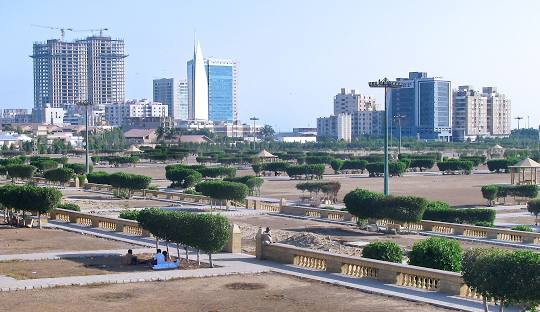
Karachi lies along the Arabian Sea, with a coastline stretching over 100 km including sandy beaches, rocky cliffs, and mangrove creeks. The natural harbor made it strategically important during British expansion, and the port remains one of the busiest in Pakistan.
The city spreads west toward Hub, east toward Port Qasim, north toward industrial corridors, and south toward the sea. Its geography explains its diversity. Ports bring trade. Trade brings migration. Migration reshapes identity.
Karachi’s climate is coastal and semi-arid. Sea winds moderate temperature compared to interior Sindh.
Karachi began as a fishing village often associated with the name Kolachi. Its location along the Arabian Sea made it suitable for maritime trade.
In the 19th century, Karachi developed rapidly as a port city. Colonial buildings, wide boulevards, and civic institutions were constructed. Saddar, Frere Hall, and Empress Market remain reminders of that era.
After Partition, Karachi received large numbers of migrants from India. It became Pakistan’s first capital. Its demographic and cultural structure shifted dramatically, creating a multilingual, multi-ethnic metropolis.
Today, Karachi is Pakistan’s financial capital and largest city.
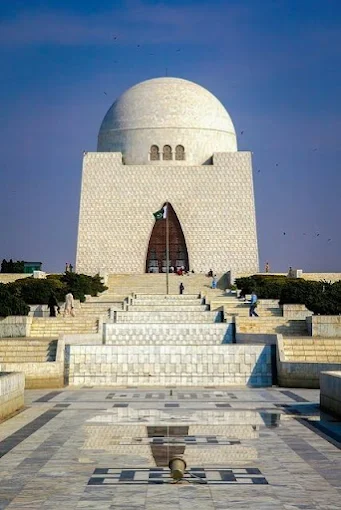
The white marble mausoleum of Muhammad Ali Jinnah stands in central Karachi. Clean geometric lines and elevated symmetry define the monument.
Visitors come not only for history but for reflection. It remains one of the most visited landmarks in the country.
Natural internal link: For visiting hours, history, and architectural detail, explore our dedicated guide to Mazar e Quaid Karachi.
The city’s relationship with the sea is constant. Clifton Beach is the most accessible stretch, while Hawksbay offers quieter shoreline further west.
Natural internal link: Our full Clifton & Hawksbay Beach guide covers seasonal conditions and best visiting hours.
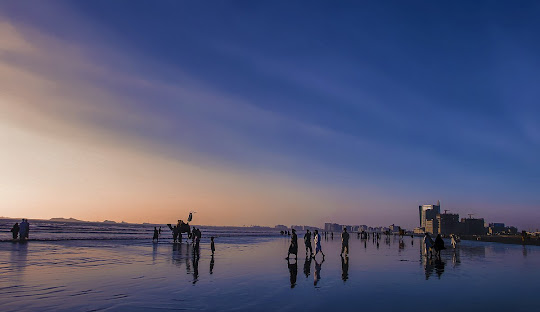
West of Karachi, rocky coastal stretches and clearer waters define this belt. French Beach is privately managed, while Mubarak Village retains fishing community character.
Natural internal link: Plan coastal escapes using our French Beach / Mubarak Village guide.
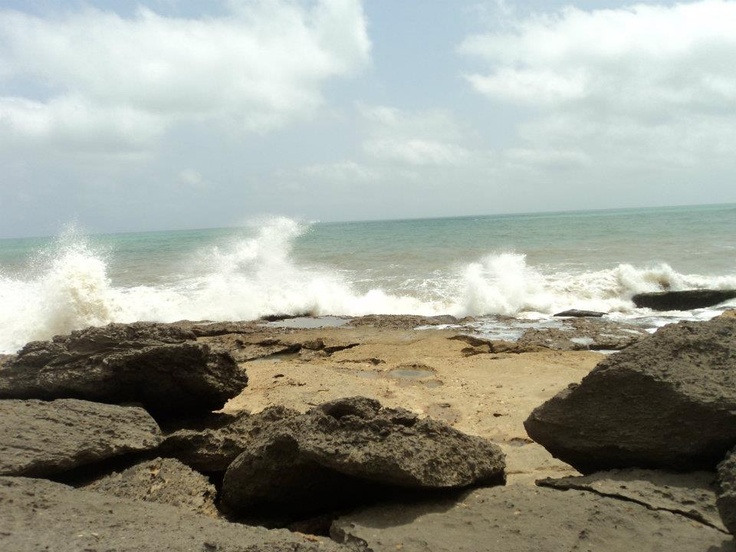
Located east of Karachi, these sandstone tombs date back several centuries and are known for intricate carvings. The site reflects Sindh’s funerary architecture traditions.
Natural internal link: Learn more in our detailed guide on Chaukundi Tombs.
Saddar remains Karachi’s colonial-era core. Frere Hall, Empress Market, and surrounding streets show Victorian Gothic and Indo-Saracenic influence.
Heritage walks reveal how Karachi transitioned from port outpost to administrative center.
Though not a tourist zone in the traditional sense, the port defines Karachi’s economic life. Container terminals, ship movement, and trade activity underpin the city’s identity.
From | Distance | Route | Approx. Time | Road Type |
Hyderabad | 162 km | M-9 Motorway | 1 hr 45 min | Motorway |
Thatta | 102 km | N-5 Highway | 1 hr 30 min | Highway |
Sukkur | 470 km | N-5 National Highway | 7–8 hrs | Highway |
Lahore | 1,215 km | M-5 + N-5 | 14–16 hrs | Motorway/Highway |
Jinnah International Airport Karachi is Pakistan’s largest airport and primary international gateway. It connects Karachi to domestic cities and major international hubs.
Airport to central Karachi travel time varies between 20–45 minutes depending on traffic.
Karachi has a coastal, semi-arid climate influenced by the Arabian Sea.
For most travelers, November to March is the best time to visit Karachi as it offers the most comfortable weather for exploring the city.
Karachi does not have one cuisine. It has absorbed many.
After 1947, migrants from Delhi, Lucknow, Hyderabad Deccan, Gujarat, Punjab, interior Sindh, and Khyber Pakhtunkhwa brought their culinary traditions. Over time, the city layered them instead of replacing them.
Karachi eats late.
Common staples include:
Burns Road remains symbolic of old Karachi’s shared dining culture. Families, students, and workers eat side by side without ceremony.
Karachi’s biryani is debated constantly. It reflects layered influence:
The “best biryani” conversation is ongoing. That debate is part of the city’s personality.
Being a port city changes food supply.
Common seafood items include:
Fishing communities along the western coast supply Karachi’s daily markets.
Karachi is a major distribution hub for produce arriving from across Pakistan.
Seasonal fruits commonly available:
Dry fruits are widely available in old markets and wholesale areas:
Because Karachi is a port and trade center, imported dry fruits are also common.
Fruit carts and juice stalls are a visible part of daily street life.
Karachi hosts both historic bakeries and modern dessert studios.
You will find:
If you are exploring things to do in Karachi, food exploration is essential. It reveals migration, trade, and class patterns more clearly than monuments.
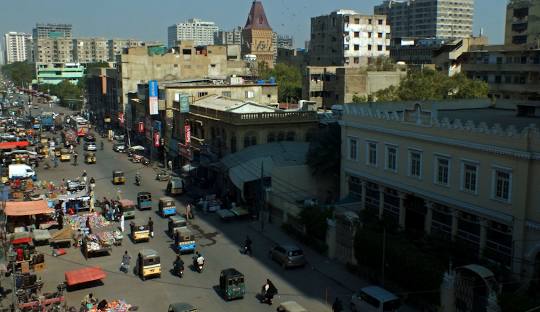
Karachi is Pakistan’s most diverse urban environment.
It is defined less by one ethnicity and more by coexistence.
Post-Partition migration reshaped Karachi permanently. Families arrived carrying:
Today, it is common to encounter:
Karachi functions through diversity, not uniformity.
Karachi remains Pakistan’s most active cultural hub.
The city hosts:
Institutions such as the Arts Council and performing arts academies nurture classical and modern expression.
Music culture includes:
Karachi produces artists continuously.
Karachi weddings blend multiple traditions.
You may see:
The city merges traditions rather than isolating them.
Karachi does not shut down early.
After 10 pm:
The night is part of Karachi’s rhythm.
Beyond high-rise districts, fishing villages such as Mubarak Village preserve maritime traditions.
Daily life revolves around:
These communities tie Karachi directly to the Arabian Sea economy.
This section turns Karachi into an experience, not just a collection of landmarks.
Do not separate Karachi’s history into isolated buildings.
Start in Saddar and walk through the colonial core rather than driving past it. Move from Frere Hall to Empress Market and understand how the British port shaped the city’s early expansion.
Visit Mazar e Quaid Karachi not just as a monument, but as part of a broader post-1947 narrative. Then contrast it with older colonial architecture to understand how Karachi transformed within one century.
Add the Chaukundi Tombs to your itinerary for a very different architectural language. The carved sandstone tells a quieter, older story compared to marble mausoleums.
Early morning at Clifton Beach gives you softer tones and fewer crowds.
Golden hour works best along the western coastline near French Beach / Mubarak Village, where rocky textures meet open horizon.
Saddar’s old buildings photograph well in angled afternoon light, especially balconies and arches.
If you want contrast, capture port cranes against sunset sky to show Karachi’s industrial identity.
Do not eat randomly.
Build a route.
Dedicate one evening to Burns Road and experience old Karachi dining culture properly.
Choose another night for Bahadurabad or PECHS and compare how the city has modernized its food scene.
Try one seafood-focused meal near the coast, especially if visiting Clifton or Hawksbay.
And do not skip fruit carts. Karachi’s mango season and citrus season reflect its trade position as a national distribution hub.
Mix your days intentionally.
Do a half-day heritage visit such as Mazar-e-Quaid or a Saddar walk, then shift to Clifton’s open promenade in the evening for relaxed family time.
Beach visits are best scheduled for cooler hours.
For structured exploration, use your micro pages such as Clifton & Hawksbay Beach and Mazar e Quaid Karachi for detailed family planning.
Attend a theatre performance or literary session if your travel dates align.
Visit art galleries in Clifton.
Look for public cultural events at Arts Council or open-air gatherings.
Karachi’s cultural life is active year-round. It is not limited to monuments.
Visit Hawksbay during winter if interested in turtle conservation awareness.
Explore mangrove areas through guided boat visits rather than informal entry.
Plan early morning beach walks for a calmer, cleaner coastal experience.
Karachi’s coastline includes mangrove ecosystems, sandy beaches, and rocky shores.
Mangroves along the Indus Delta near Karachi are among the largest arid-climate mangrove forests in the world. They:
Species / Habitat | Location | Season | Notes |
Green sea turtles | Hawksbay area | Nesting season (typically winter) | Protected nesting sites |
Migratory shorebirds | Coastal wetlands | Winter | Part of flyway routes |
Mangrove fish nurseries | Indus Delta creeks | Year-round | Supports fisheries |
Crabs & coastal invertebrates | Mangrove belts | Year-round | Ecological balance |
Karachi’s wildlife is coastal, not forest-based.
Karachi’s climate strongly affects visitor comfort.
The most comfortable time to explore is typically November to March.
Karachi matters because it carries movement.
Ships arrive. People arrive. Ideas arrive.
It is Pakistan’s economic heart, cultural crossroad, and coastal gateway. If you are looking for places to visit in Karachi Pakistan, understand that the city reveals itself through layers: