Khewra Salt Mine is the largest salt mine in Pakistan and is often described as the world’s second largest. Located in the Salt Range of Punjab, it has been a working mine for centuries and remains an active source of rock salt today.
Unlike open archaeological sites, Khewra is an underground industrial space that also functions as a controlled visitor site. Visitors enter the mine through a designated tunnel and follow guided routes that pass through salt chambers, tunnels, and demonstration areas.
The experience here is structured and regulated. It is not an adventure site and not a natural cave. What makes Khewra significant is its scale, continuity of use, and the way natural geology has shaped human activity over time.
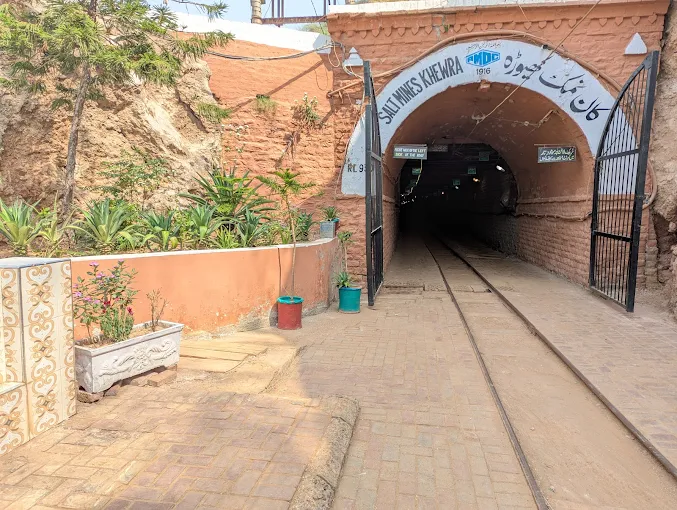
Khewra lies within the Salt Range, a low mountain system stretching across northern Punjab. Salt deposits in this region were formed millions of years ago, long before human settlement.
Historically, local accounts and documented records link the discovery of salt here to the time of Alexander’s campaign in the region, when his horses were observed licking salt rocks. Organized mining developed later and expanded significantly during the colonial period, when systematic extraction methods were introduced.
Today, the mine is operated by state authorities and continues to supply edible and industrial salt. Its dual role as a production site and visitor destination makes it distinct from many heritage locations.
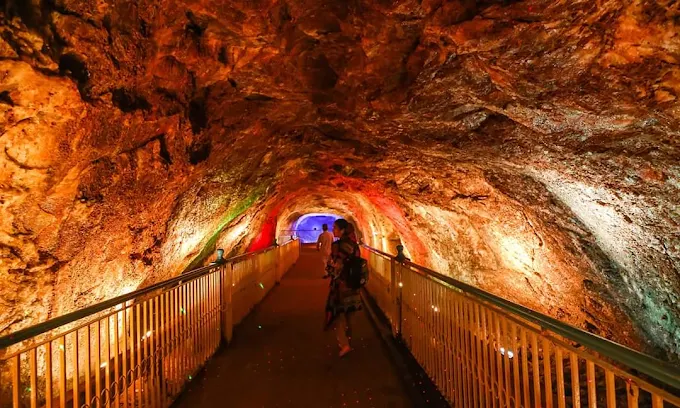
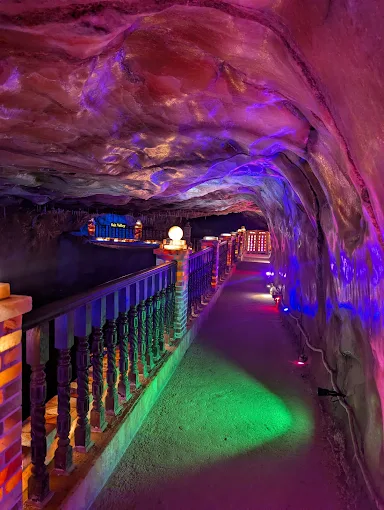
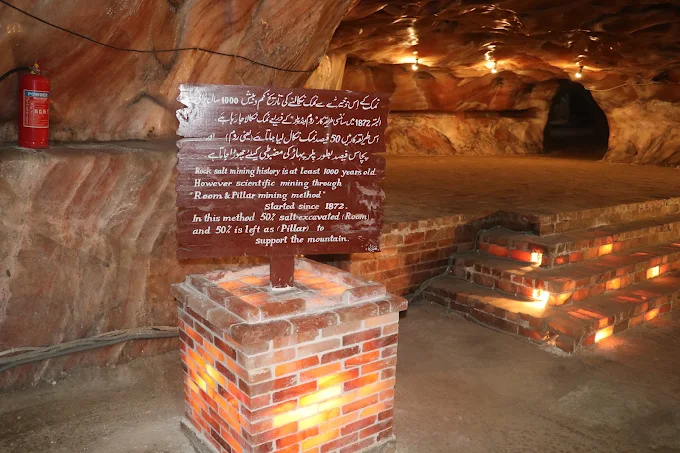
Visitors move through a defined route inside the mine, passing tall chambers supported by salt pillars. Lighting highlights the natural color variations of the salt, including pink, white, and grey tones.
Along the route, there are constructed features made entirely of salt blocks. These are demonstration elements rather than historical remains, designed to show the versatility of the material.
Guides explain how salt is extracted, transported, and processed. This adds an educational layer to the visit, especially for students and first-time visitors.
Photography is allowed in specific areas. Flash and unrestricted movement are not permitted due to safety and preservation concerns.
At the end of the guided route, visitors usually find small stalls selling items made from Khewra salt. These include decorative pieces, salt lamps, and packaged edible salt.
While simple in presentation, these items reflect the mine’s long-standing role in everyday use, not just industrial extraction. Purchasing these products supports local livelihoods and offers a tangible reminder of the visit.
Access point: Jhelum
The mine is reached by road via Pind Dadan Khan. The final approach is well-marked and suitable for standard vehicles.
Entry is ticketed and managed by mine authorities. Visitors must join guided groups and follow safety instructions. Entry timings and ticket prices may change, so checking locally before arrival is advised.
Best time to visit:
Seasonal notes:
Winter visits are generally more comfortable for travel and waiting times.
Khewra Salt Mine is a controlled industrial environment. While visitor routes are safe, the underground setting may feel confined to some people. Visitors with claustrophobia should assess comfort levels before entering.
Children should remain with adults, and running or climbing is not permitted.
Salt extraction is ongoing at Khewra. Visitors are entering a working mine, not a preserved monument. Respect for operational boundaries and equipment is essential.
The site’s continued function depends on a careful balance between tourism and industry.