
Katas Raj Temples are a group of ancient Hindu temples built around a natural pond, located in the Salt Range of Chakwal district. Unlike single-structure religious sites, Katas Raj functions as a complex where water, worship, and architecture are inseparably linked.
The site is sacred primarily because of the pond at its center, believed in Hindu tradition to be associated with Lord Shiva. Over centuries, temples were built around this water body, creating a layered religious landscape rather than a single monumental shrine.
Today, Katas Raj is both an archaeological site and a place of religious reverence. Visitors come to understand its spiritual importance, observe ancient construction, and experience the stillness that defines the complex.
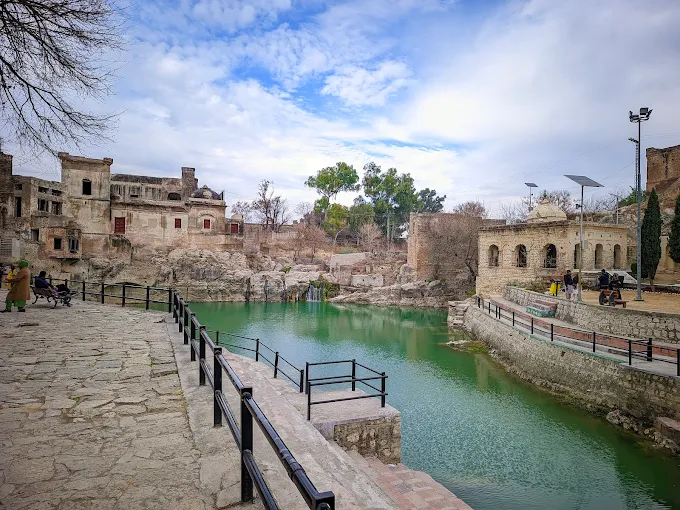
Katas Raj holds deep importance in Hindu religious tradition. According to belief, the pond formed from the tears of Lord Shiva, which is why it is considered sacred. This belief shaped the site’s religious role and explains why temples were constructed facing the water rather than oriented outward.
Historically, the temples span multiple periods, with structures attributed to Hindu Shahi rulers and later reconstructions. The complex shows a mix of architectural styles rather than a single unified design, reflecting centuries of use, repair, and change.
Katas Raj remained an active pilgrimage site until the mid-20th century. Today, it continues to be visited by Hindu pilgrims, particularly during religious occasions.
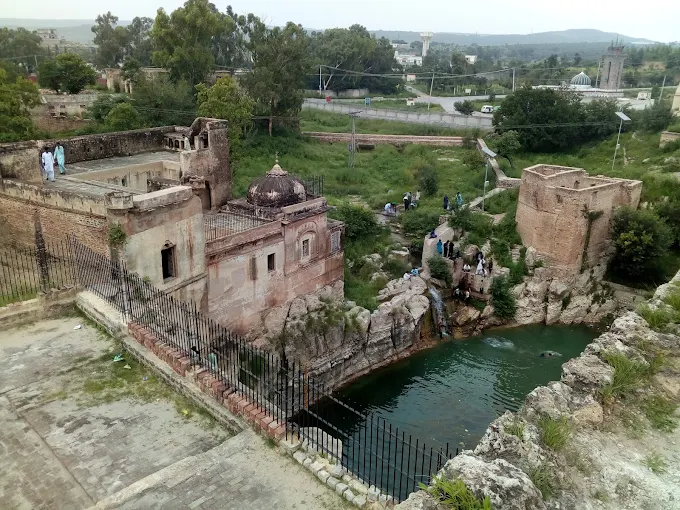
The pond is the spiritual heart of Katas Raj. Still and reflective, it anchors the entire complex. Visitors often spend time here quietly, observing how temples rise above the waterline.
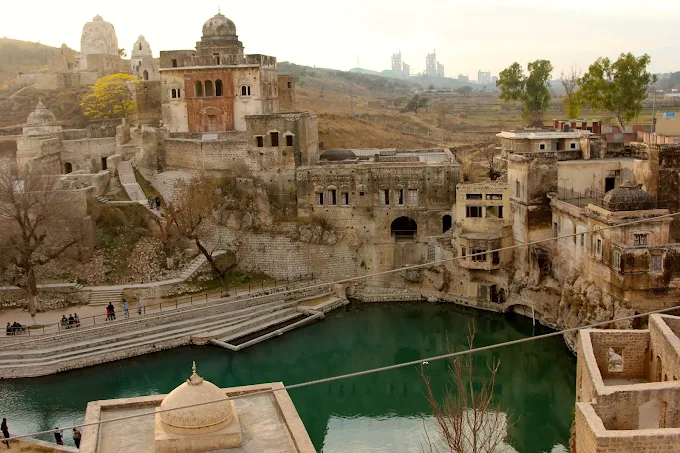
Multiple temples surround the pond, each varying in size and condition. Some retain detailed carvings, while others survive mainly as stone frameworks. Together, they show how religious architecture developed over time.
The temple complex sits within the Salt Range hills. From higher points, visitors can see how the site fits naturally into the surrounding landscape rather than dominating it.
From | Distance | Approx. Travel Time |
Chakwal city → Katas Raj Temples | ~40 km | 1 – 1.25 hours |
Islamabad → Katas Raj Temples | ~140 km | 3 – 3.5 hours |
Lahore → Katas Raj Temples | ~260 km | 5 – 6 hours |
Access is by road through the Salt Range. The final stretches are narrow in places, so daytime travel is recommended.
Entry is generally ticketed and managed by local authorities. On religious occasions, access arrangements may differ for pilgrims.
Best time to visit: October to March
Summers in the Salt Range can be extremely hot. Winter offers clearer views and comfortable walking conditions.
Katas Raj is both a heritage site and a living religious space. Visitors should treat it with care, avoiding damage to stonework and respecting ongoing religious use. Preservation of the pond and temple structures is essential to maintaining the site’s meaning.